Blog
MINIMALLY INVASIVE CABG [faster recovery, less pain]by DR.SRINATH/DR.SENTHIL
What is Minimally Invasive CABG: Faster Recovery & Less Pain
Heart disease is among the most common and deadly illnesses worldwide. Coronary Artery Bypass Grafting surgery or heart bypass grafting is one of the treatments for heart diseases. Heart bypass grafting surgery traditionally requires long recovery periods and extensive incisions. However, patients who opt for heart surgery have a choice between traditional heart-bypass grafting surgery and another alternative. The alternative is a minimally invasive surgery.
What is Minimally Invasive Coronary Artery Bypass Grafting Surgery?
Minimally invasive Coronary Artery Bypass Grafting surgery, also referred to as MIV-CABG, is an innovative technique that enables making small incisions while performing heart surgery. In addition, this procedure requires using robotic instruments to conduct the surgery precisely. This procedure is appropriate for bypassing the affected arteries with minimal damage to the tissues.
A patient considering minimally invasive bypass grafting will recover from the procedure with fewer side effects, discomfort, and scars compared to traditional bypass grafting. Similarly, the advantages of minimally invasive CABG outweigh the benefits of traditional CABG surgery.
The advantages of minimally invasive CABG over traditional CABG
Minimally invasive CABG has several advantages over traditional CABG surgery. Some of the benefits of minimally invasive CABG include less pain and scars, a short convalescence period, and fewer hospitalization days. In addition, MIV-CABG has lesser risks of infection and quicker convalescence than traditional CABG.
Less pain and scars
One of the benefits of minimally invasive CABG is that it does not require making extensive incisions to access the heart as is the case with traditional CABG. Therefore, this surgical procedure does not cause as much pain and leaves almost no scars as traditional CABG.
Shorter recovery period
Another benefit of minimally invasive CABG is that it allows a shorter recovery period than traditional CABG. For instance, a patient opting for MIV-CABG will recover from surgery faster and, therefore, return to work or resumption of other activities earlier than a patient opting for traditional CABG.
Fewer hospitalization days
In addition, MIV-CABG allows fewer hospitalization days than traditional CABG. Since this procedure allows patients to return to work or other activities earlier than traditional CABG, it also allows patients to stay in the hospital for a short period. Consequently, fewer days spent in the hospital will result in fewer risks of hospital infections and additional costs incurred due to prolonged hospitalization after surgery.
Lesser risk of infections
In addition, minimally invasive CABG has lesser risks of post-surgery complications and infections than traditional CABG.
Faster convalescence
Finally, convalescence after surgery is vital to allow the body to heal. Moreover, exercising aids the convalescence process. Therefore, a patient who has opted for MIV-CABG will recover from surgery faster than a patient who has opted for traditional CABG.
Heart Bypass Surgery Technique
A minimally invasive Coronary Artery Bypass Grafting procedure typically consists of making small incisions instead of the large incision made during traditional CABG. Additionally, this procedure often consists of using special instruments to expose the heart better. These instruments help to facilitate the reaching of the surgeon to the heart tissues to perform the surgery. In most cases, minimally invasive CABG consists of taking a healthy blood vessel from the patient’s body and using it to bypass the blocked part of the heart artery. Lastly, it is worth noting that this procedure also has the option of robotic-assisted surgery. The decision to perform robotic-assisted surgery is optional and can be patient-dependent.
Rehabilitation after Minimally Invasive Coronary Artery Bypass Surgery
Minimally invasive Coronary Artery Bypass grafting rehabilitation generally consists of medication, lifestyle modifications, and post-surgery treatments. The first step in post-surgery rehabilitation following MIV-CABG is the convalescence period. Throughout the convalescence stage, the medical personnel will monitor the patient’s progress throughout the recovery process. Additionally, this convalescence period will involve less discomfort from the incision sites since minimal tissue damage is caused by this procedure. In addition, the medical personnel will encourage physical therapy to aid in the patient’s healing process after surgery. Another crucial element of post-surgery rehabilitation after MIV-CABG is the cardiac rehabilitation program. Cardiac rehabilitation generally consists of lifestyle modifications, such as physical activity to enhance heart functionality. This procedure also entails a heart-healthy diet. The patient will also have to adhere to frequent check-ups to ensure that the grafts are not faulty and that the healing process is not hindered. Lastly, cardiac rehabilitation, along with medication and the convalescence period, is crucial to post-surgery rehabilitation and should not be overlooked.
Who are the Eligible Candidates for Minimally Invasive CABG?
Several criteria determine the eligibility of a patient for Coronary Artery Bypass grafting surgery. For example, minimally invasive CABG is appropriate for patients with heart diseases, such as blocked coronary arteries with normal heart function. However, patients with heart diseases that prevent minimally invasive surgery are not suitable candidates for this procedure. Although age is a significant risk factor for heart diseases, it is not a determining factor for minimally invasive CABG. As a result, older patients with strong heart muscles and no other health complications can consider this procedure. Lastly, minimally invasive CABG can be considered by patients with existing conditions, such as diabetes and high blood pressure.
Surgical Risks
Minimally invasive CABG, like all other surgical procedures, carries various risks. Nevertheless, MIV-CABG has lesser risks than traditional CABG. Some of the risks associated with MIV-CABG include tissue bruising or bleeding around the incision site, abnormal heart rhythms, and post-surgery infections. Therefore, it is essential to consider the possible risks and benefits of minimally invasive CABG before deciding to undertake the procedure.
Final Remarks
Minimally invasive CABG is an extraordinary procedure that allows a heart surgeon to perform heart surgery with minimal post-surgery discomfort and a faster convalescence period. Therefore, every patient considering CABG should discuss with the doctor the option of minimally invasive CABG and take advantage of all the benefits it offers. It is also essential that the patient adheres to all the post-surgery care and post-surgery rehabilitation regime because it will promote faster healing after surgery.
FAQs
When can I go back to work after minimally invasive CABG?
Most people can go back to work after a few weeks of minimally invasive CABG.
Are there any dietary restrictions I need to adopt after minimally invasive heart surgery?
Yes, there are dietary restrictions after minimally invasive heart surgery. It is vital to adhere to a heart-healthy diet after heart surgery. Usually, a heart-healthy diet is discourage from excessive consumption of saturated fats, sugar, and salt.
Is it possible to have this procedure if I have reached old age?
Yes, it is possible to have minimally invasive CABG if you have reached old age as long as you have strong heart muscles. However, it is essential to consult your doctor to determine if this procedure is suitable for the individual.
Can minimally invasive CABG be used to treat all kinds of blockages?
Minimally invasive CABG can be used to treat all kinds of blockages. However, in some cases, traditional CABG may be recommended.
When can I resume exercising after minimally invasive CABG?
It is advisable to resume exercising as early as possible after minimally invasive CABG. Moreover, exercising after surgery promotes faster healing.
Will there be any scars after minimally invasive CABG?
There will be almost no scars after minimally invasive CABG.

Dr. Srinath Vijayasekharan
MBBS, MS, DNB
Director & Senior Consultant Dept of CTVS and Heart & Lung Transplantation, Dr. Rela Institute & Medical Centre
Speciality:
Cardiac Sciences, Cardiothoracic and Vascular Surgery, Heart and Lung TransplantationDegrees:
MBBS, MS, DNBDesignation:
Director & Senior Consultant Dept of CTVS and Heart & Lung Transplantation, Dr. Rela Institute & Medical Centre
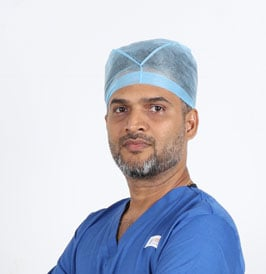
Dr. Senthil Kumar D
MBBS, MS, MCh
Clinical Lead and Senior Consultant, Dept of CTVS and Heart & Lung Transplantation, Dr. Rela Institute & Medical Centre
Speciality:
CARDIAC SCIENCES, CARDIOTHORACIC AND VASCULAR SURGERY, HEART AND LUNG TRANSPLANTATIONDegrees:
MBBS, MS, MChDesignation:
Clinical Lead and Senior Consultant, Dept of CTVS and Heart & Lung Transplantation, Dr. Rela Institute & Medical Centre
Time Schedule
Monday 09:00 AM - 04:00 PM Tuesday 09:00 AM - 04:00 PM Wednesday 09:00 AM - 04:00 PM Thursday 09:00 AM - 04:00 PM Friday 09:00 AM - 04:00 PM Saturday 09:00 AM - 04:00 PM
